
LED and red light therapy are often used interchangeably in the beauty industry. While that wouldn’t be much of a problem under normal circumstances, it might prove a bit confusing for a skin care beginner when it’s time to shop for some light therapy. In this article, we will break everything down, covering how each works and how to use them effectively in your routine.
What is LED and Red Light Therapy in Skin Care?
LED Light Therapy
LED is an abbreviation of light-emitting diodes, which is a technology used to deliver different kinds of light. As such, LED devices can emit various wavelengths, including red, blue or near-infrared light. In the skin care world, these varying wavelengths are used to target different skin concerns. It is basically the light behind the glow.
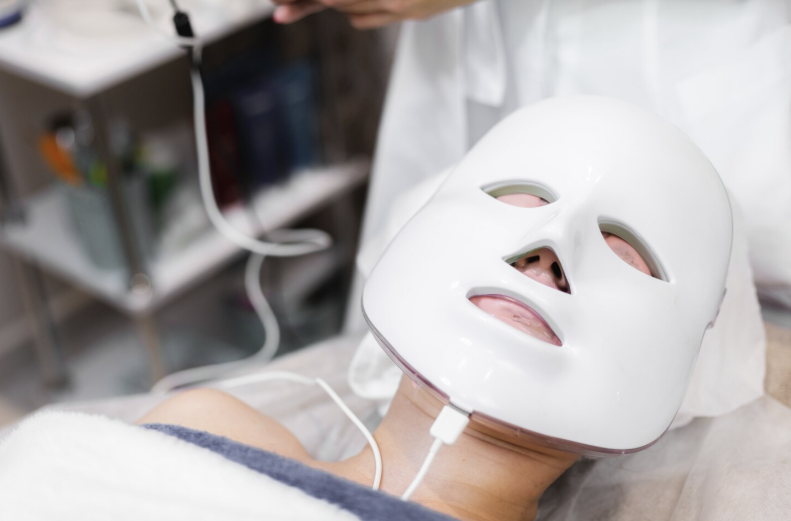
Contrary to what most people think, LED light therapy is readily available to the regular at-home user, not just at the dermatologist’s office. In fact, you can easily incorporate an LED face mask into your daily routine and enjoy professional-grade therapy without leaving your home. Just make sure you cleanse your face adequately, wear the mask for about 15 minutes and follow up with a hydrating serum to lock in the benefits.
Red Light Therapy
Red light therapy, on the other hand, is a specific wavelength range of light used for skin rejuvenation. Think about it this way: LED is a lightbulb and red light therapy is the light it gives off.
In the skin care business, red light therapy is used to promote healing, boost collagen production, increase blood flow and reduce inflammation. In scientific terms, it uses specific wavelengths of light that can be absorbed by mitochondria (the energy-producing parts of your cell).
Once absorbed, the light increases cell energy production, which in turn stimulates the body’s natural healing processes. Thanks to its wide array of benefits, red light therapy has proved very useful for addressing various skin concerns, including fine lines, acne and even pain management.
LED vs. Red Light Therapy: The Key Differences
Light Spectrum
LED therapy is not limited to just one colour – it can emit a full spectrum (with blue, yellow, red and near-infrared). Each of these wavelengths plays a unique role.
For instance, blue light is usually used to target and calm acne breakouts because it only penetrates the outer part of the skin. Red light on the other hand (used for red light therapy) dives a lot deeper, and that’s why it is used to support collagen production and skin rejuvenation.
It is with this premise that companies like Nooance have designed LED face masks with a full spectrum of light that can target multiple concerns in one session.
Biological Effects
Besides the light spectrum, LED and red light therapy also differ in how they interact with the body.
LED light therapy is recommended for someone who needs a general skin overhaul. It doesn’t discriminate issues – once you are under the lights, the different wavelengths will perform their specific function. For example, the blue light (in LED light therapy) is perfect for antibacterial benefits as it interacts with the skin surface.
When it comes to red light therapy, the specific wavelength interacts with the mitochondria (instead of the bacteria on the surface). That is why it is recommended for people who need long-term skin rejuvenation.
Professional vs. At-Home Use
In addition to varying biological effects, LED and red light therapy also differ in where they are commonly used. For instance, you will often find LED light therapy systems in professional spas or a dermatology clinic (although at-home versions are available). Here, they will usually customize the different light types to suit your specific needs.
For red light therapy, it is commonly used at home – typically through dedicated masks and handheld devices that are designed for daily use.
Why Do the Terms Get Mixed Up?
Whether you are a beginner or not, it is very easy to get confused by the two terms: LED and red light therapy. And there are a few reasons why that is the case.
For starters, most red light devices are powered by LED technology. Even some brands use the two terms interchangeably, making it harder for people to tell them apart. But here is the truth: all red light therapy uses LED, but not all LED devices deliver red light.
In simpler terms, the difference lies in the wavelength – ‘LED’ is general while red light therapy is more specific.
Conclusion: Why is it Important to Understand the Distinction?
Understanding the distinction between LED light therapy and red light therapy is important, as it helps you make smarter skincare choices. For instance, if you intend to fight fine lines and aging, you should invest in a device that clearly indicates “red light wavelength.” Similarly, if your skin issues are surface-level, like acne, understanding the distinction ensures you don’t break the bank for an unnecessary device designed for a different purpose.
–




